Duct Theory
Ducting for More Power: The Secret Behind EDF Turbines
Have you ever wondered how those small, sleek jets used for RC planes fly so fast and efficiently? The secret lies in a clever engineering trick called ducting, especially when it comes to Electric Ducted Fan (EDF) turbines. Let's explore how ducting a propeller boosts both efficiency and thrust, just like a superhero cape empowering a regular person!
Taming the Twisters
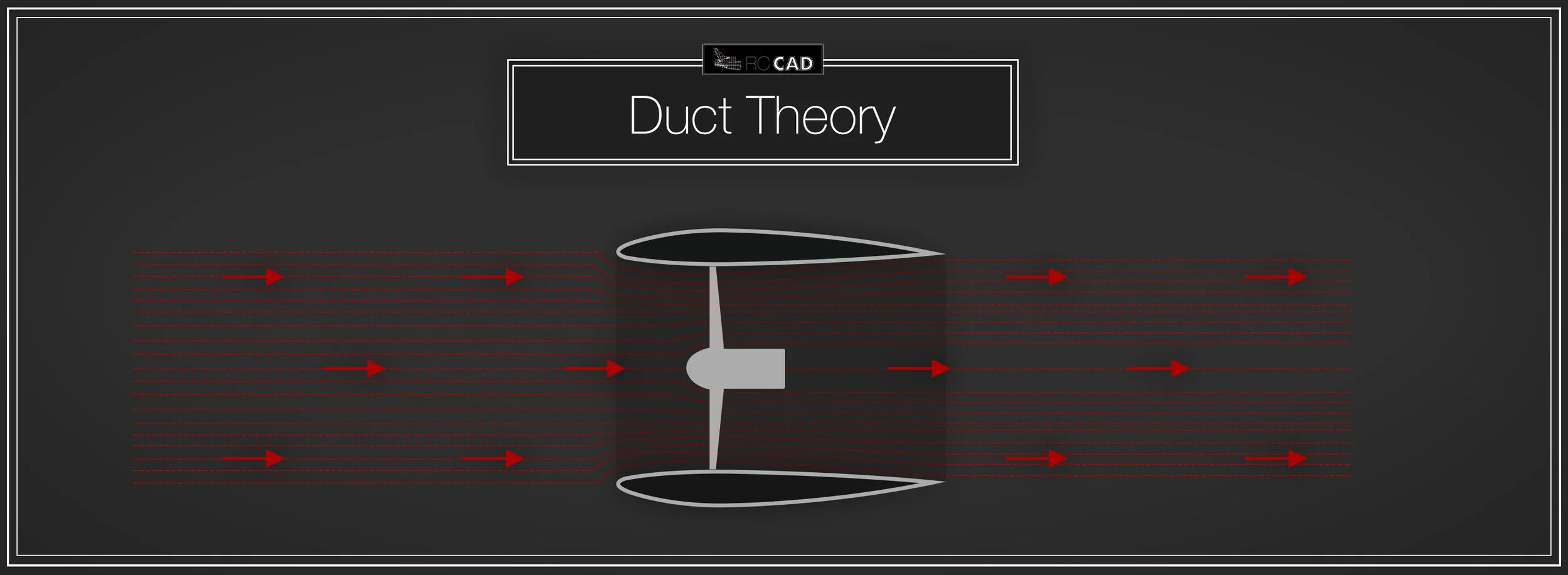
Imagine a propeller spinning freely in the air. As the blades rotate, they create tiny whirlwinds, or vortices, at their tips. These vortices waste energy, like little tornadoes stealing power from the propeller. Ducting, which is basically surrounding the propeller with a tube or shroud, helps control these vortices. By guiding the airflow around the propeller tips, ducting reduces energy loss, making the propeller more efficient.
Accelerating the Airflow
Besides reducing energy loss, ducting also speeds up the air passing through the propeller. This is because the duct acts like a narrowing pipe, forcing the air to squeeze through a smaller space. As the air accelerates, it gains energy. This faster-moving air helps the propeller generate more thrust, pushing the plane forward with greater force. Think of it as a water slide - the steeper and narrower it is, the faster you go!
A Helping Hand from Bernoulli
There's another cool trick ducting plays, related to a scientific principle called Bernoulli's principle. Simply put, this principle states that faster-moving air has lower pressure. The duct creates an area of low pressure just in front of the propeller, which helps "suck" air into it. This increased airflow further contributes to improved thrust and efficiency.
The Bernoulli principle, a fundamental concept in fluid dynamics, states that as the speed of a fluid increases, its pressure decreases, and vice versa. This relationship between fluid velocity and pressure has profound implications in various fields.
Its discovery was crucial as it provided a foundational understanding of fluid behavior, leading to advancements in numerous areas:
Aviation: It explains the generation of lift on aircraft wings, enabling the design of efficient and safe airplanes.
Engineering: It's utilized in the design of pipelines, pumps, and turbines, optimizing fluid flow and energy transfer.
Medicine: It plays a role in understanding blood flow and cardiovascular health, contributing to advancements in medical devices and treatments.
EDF Turbines
Electric Ducted Fans (EDFs) take ducting to the next level. These compact powerhouses are designed specifically to combine a carefully selected electric motor with a ducted. The duct is specially designed to optimize airflow and minimize energy loss. This allows EDFs to produce impressive thrust and efficiency, making them perfect for high-performance RC jets.
Beyond RC Planes
Ducting isn't just for model airplanes. It's also used in real-world aircraft, like the iconic Harrier jump jet. The Harrier's unique design uses ducted fans to direct thrust downwards, enabling it to take off and land vertically. Ducted fans are even being explored for future electric aircraft, thanks to their potential for quiet and efficient operation.