The Importance of Aeronautics

Aeronautics has been one of the most important and influential sciences of the modern world and will continue to be so, far into the future. It is one of the few technologies that brings together a vast array of sciences which directly impacts a significant percentage of a country's GDP (Gross Domestic Product). Let’s explore the various areas of aeronautics and its impacts.
What is Aeronautics?
Aeronautics is the study and science of controlled flight, including lighter than air craft. It encompasses a multitude of disciplines such as:
- aircraft operations
- aerodynamics
- structural engineering
- flight control systems
- aircraft design
- fluid dynamics
- aerial navigation
- aircraft manufacturing
- physics
- material sciences
Why is Aeronautics Important?
Aeronautics contains a large array of scientific disciplines and its importance can’t be understated. It affects every aspect of our modern world. From the technology we enjoy using, to a country’s economic growth and stability. It also plays a vital role in empowering countries to protect their sovereignty.
It is also a field that employs hundreds of thousands of well paid people globally. According to the US Bureau of Labor Statistics, as of 2019 there are more than 66,000 aerospace engineers who earn a median income of $116,500 per year ($56.01 per hour). To be an aerospace engineer you must have expert competence in aeronautics.
The same agency also reports there are more than 127,000 commercial pilots in The United States, roughly 40% of all pilots in the world earn a median income of $121,430 per year. Globally there are an estimated 315,000 active commercial pilots. Every one of these pilots, including non commercial pilots, must be competent and pass regular written examinations which includes practical aeronautics knowledge.
“Did you know that U.S. civil aircraft manufacturing is the country’s largest net export?”
According to the FAA (Federal Aviation Administration of the United States) civil air transportation, one of the primary beneficiaries of aeronautics, accounts for 5% of the US GDP worth $1.8 trillion alone in economic activity. It also accounts for 3.6% of global GDP. If we expand to include all of aviation that number increases to 4.1% global GDP which is estimated to be $4.1 trillion of economic activity.
As the backbone of all things that fly, aeronautics and those who work within its broad scope of topics have made huge contributions to our society. Its applications have led to huge innovations such as GPS, safe & fast intercontinental air travel, global communications, advanced navigation systems, multitudes of composite materials, interplanetary space travel and so much more.
The United States has been the dominant leader in aeronautics, aerospace, and astronautics, however, this will rapidly change as we progress further into the 21st century. In 2016 it was reported by The World Economic Forum that China is leading the pack with STEM (Science Technology Engineering and Mathematics) graduates with around 4.7 million entering the workforce. India is second with 2.6 million STEM graduates. In contrast, the United States has only graduated 560,000 minds in the same time period.
If Aeronautics is the foundation of aerospace, then STEM is the foundation of Aeronautics. They all build upon each other.
In the 1980’s it started to become apparent to teachers, economists, and politicians that the United States was declining in its STEM proficiency. This retraction in competency will most likely have serious negative impacts on the United States’ leadership within the sciences. This, undoubtedly, will ultimately lead to a further decline in economic output due to fewer contributions by the American aeronautical and aerospace professions.
Experts who keep a close eye on this field have warned that the United States will fall far behind on its current course within the sciences and engineering fields. This regression can lead to significant threats to American National Security due to lower economic power and rapidly advancing technologies produced around the world, not only by ally countries, but also adversaries.
The authors of the book “Is College Worth It?” by Dr. William J Bennett and David Wilezol note; between 2003 and 2008, 50% of the United States’ STEM related workforce was made up of immigrants. Additionally, they sited that graduates majoring in many STEM fields at US universities are made up of immigrant students. Notably Chinese students.
Enrollment in American Universities is showing a very steady increase of international students enrolling in STEM course, while at the same time, enrollment of residents and citizens of the US are in rather rapid decline. This trend has been happening for nearly 30 years.
The OECD's Program for International Student Assessment test, known as the PISA test, in 2015, released their results and they did not look good for the United States. The test showed that out of 71 countries tested, US students ranked:
38th in Mathematics
24th in Science
To paint the picture a little more starkly, the OECD (Organization for Economic Co-operation and Development) at the time had 35 member states, today their are 36. Of those 35, from the same test results, the United States ranked near the bottom at 30th for math and Science.
Members of the OECD
Austria
Belgium
Canada
Chile
Colombia
Czech Republic
Denmark
Estonia
Finland
France
Greece
Hungary
Iceland
Ireland
Israel
Italy
Japan
Korea
Latvia
Lithuania
Mexico
Netherlands
New Zealand
Norway
Poland
Portugal
Slovak Republic
Slovenia
Spain
Sweden
Turkey
United Kingdom
United States
One final point. The National Foundation for American Policy reported that many American universities could not survive without the enrollment of international students. This means, even the US Higher Education sector is feeling the squeeze with fewer and fewer American students enrolling in degrees needed in one of the most critical global industries. To illustrate this point here are some of the numbers.
International Students account for the following percentages of full time grad students in American Universities:
81% - Electrical engineering
79% - Computer science
75% - Industrial Engineering
69% - Statistics
63% - Mechanical engineering
59% - Civil engineering
57% - Chemical engineering
Further more, according to a report published by the Ewing Marion Kauffman Foundation, the amount of international students working towards their PhD in the US has doubled since the early 1990’s. It is projected by this year, 2020, at least 50% of graduates from US Universities with STEM PhD degrees will be non US citizens and non permanent residents.
While this article isn’t specifically about STEM and the overall advanced sciences, it is important to emphasize the importance and gravity of aeronautics and the impact this technical field has on our lives and a country’s overall economic health.
Why is Aeronautics Important for RC Hobby communities?
Although aeronautics isn’t critical to enjoying the hobby, when it comes to UAVs such as RC Airplanes, RC Helicopters, and Drones, having a good foundation in aeronautics is important for several reasons:
You will have developed an understanding of lift and how it interacts with weight, drag, and thrust.
You’ll know how altitude, humidity, and air temperature affects the performance of your airplane.
You will be able to design your own RC aircraft because you’ll have a fundamental understanding of aerodynamics and design with weight and balance in mind.
You’ll have an understanding of construction materials and methods as it relates to the structural integrity of the aircraft while keeping it as light as possible.
You’ll be able to make smarter decisions when experimenting with different designs.
You’ll make more informed decisions when selecting propulsion systems.
It serves the perfect gateway into a profession in aerospace and aerospace engineering if you chose to pursue such a profession.
The concepts and known laws of physics that apply to large aircraft also apply to models which means your skills and knowledge are transferable to full scale applications.
Bottom line, not only will you be a better designer and builder, you will also be a better pilot. Knowing how your aircraft may perform in a variety of conditions will ensure a fun experience in the hobby. As a builder of model airplanes, you can never know too much about aeronautics.
A Gateway for Youth Interest In Aeronautics
Aeronautics is important to the RC community for many reasons. It not only provides a fun, tactile method of learning all about flight, it also brings people together to share ideas, teach one another new skills and techniques. Through this casual and enjoyable hobby, modelers develop the skills to build, design and flying model aircraft of their own. These skills especially in a young persons mind is often the spark which leads towards a career in aeronautical and aerospace engineering.
The 3 Pillars of Aeronautics |
||
|---|---|---|
| Aviation | Engineering | Rocketry |
| Generally speaking, aviation is the practical application of aeronautics. Today aviation covers all powered and unpowered flight. | The design, manufacturing methods, and assembly of a variety of aircraft types from fixed wing airplanes and rotorcraft to ligher than air ships. | All crafts which use rockets for that fall into this category. We are all familiar with the space shuttle, missiles and other forms of rockets. |
Aeronautics vs Aerospace
The differences between aeronautics and aerospace is equivalent to comparing architecture to skyscraper construction, you simply can’t have one without the other. Aeronautics is the foundation on which aerospace is built. Aerospace uses all of the same physics, dynamics and mathematics established in aeronautics, however, it applies these principals in more advanced applications to develop new technologies. This does not preclude aviation, aircraft design, construction and Manufacturing.
Much like aeronautics, aerospace also includes the study, manufacturing, and application of propulsion systems, materials, flight mechanics, and use of aerodynamics. From that point on aerospace becomes more advanced by including thermodynamics, celestial mechanics, non atmospheric control systems, propulsion, acoustics and guidance systems.
When it comes to aerospace there are two types of engineers. Their scope of work is what distinguishes the 2 from each other:
Aeronautical
These engineers work predominantly with propulsion and aircraft designs. Both of which require exhaustive study of their aerodynamic characteristics and performance. Their work is limited to flight within our atmosphere.Astronautical
These engineers are primarily focused on spacecraft, satellites, interplanetary travel and how these craft behave and perform outside of our atmosphere. However, they also make use of the skills used by aeronautical engineers.
As you can see, there are parts which both share in common but the distinction is derived from the environment in which their craft will operate.
Aeronautical Engineering, A Rapidly Growing High Paying Profession
As previously noted, aeronautical engineering is a broad and ever growing field which is experiencing steady growth. One of the faster growth areas within aeronautics and aerospace is personal point to point air transportation, and space travel.
The aging model of large 400+ passenger airliners flying hub and spoke routes is quickly being replaced by smaller, more efficient airplanes that can fly similar distances to more airports around the world. Where things get even more interesting is an idea of global, automated and autonomous point to point travel.
Advanced aeronautics is converging with super computing, advanced navigational systems, and super efficient battery technology to make individual door to door travel as easy as hailing a car from a ride sharing app.
These seemingly futuristic ideas are now possible thanks to the incredible advanced made with unmanned aerial vehicles or UAVs. These were originally within the domain of the military and space agencies. Over the last decade, however, consumer quad-copters entered the scene as one of the hottest tech-toys to have. This has lead aerospace and tech giants around the world to a completly rethink travel and mobility.
Currently Airbus and several startups in China and the US are actively developing small, automated transportation quad-copter like vehicles for short range travel with the ability to pick you up at your home, and take you anywhere you want to go… even the middle of nowhere.
Top 16 Aeronautical & Aerospace Companies where Engineers are in High Demand.
- Boeing
- Lockheed Martin
- Airbus
- General Dynamics
- Northrop Grumman
- SpaceX
- Blue Origin
- Rolls Royce
- GE Aviation
- Reaction Engines
- United Technologies
- Raytheon
- Safran
- Honeywell
- Leonardo
While most of the companies listed above are American companies, don’t be deceived by where the growth is actually happening. Most of these companies are forced to higher non American talent due to the lack of American graduates with aeronautical and aerospace degrees. Today, the U.S. is still the leader in producing STEM related aerospace goods and services but as things evolve challengers will start to emerge.
China alone has made STEM education the country’s top priority having managed to triple their overall educational investments in just 10 years to a staggering $15 billion dollars. This foreshadows a burgeoning aerospace sector where most of the growth will happen in the coming decades.
Conclusion
Never discount the importance of hobbies especially for young people. They are excellent at teaching and cultivating discipline, skill, finesse. As I have summarized in this article, aeronautics is a massive field effecting our lives in so many ways. Many of which are taken for granted or hardly recognized. All of these technologies were born out imagination and a spirit of experimentation and collaboration. As we march into the future let’s help our kids discover the joys and excitement of flight.
Don’t start with academic methods of teaching aeronautics, start with the craft of building or assembling model airplanes. Allow that to ignite a fire a youths belly to pursue a career in aviation, space exploration, aircraft design and manufacturing.

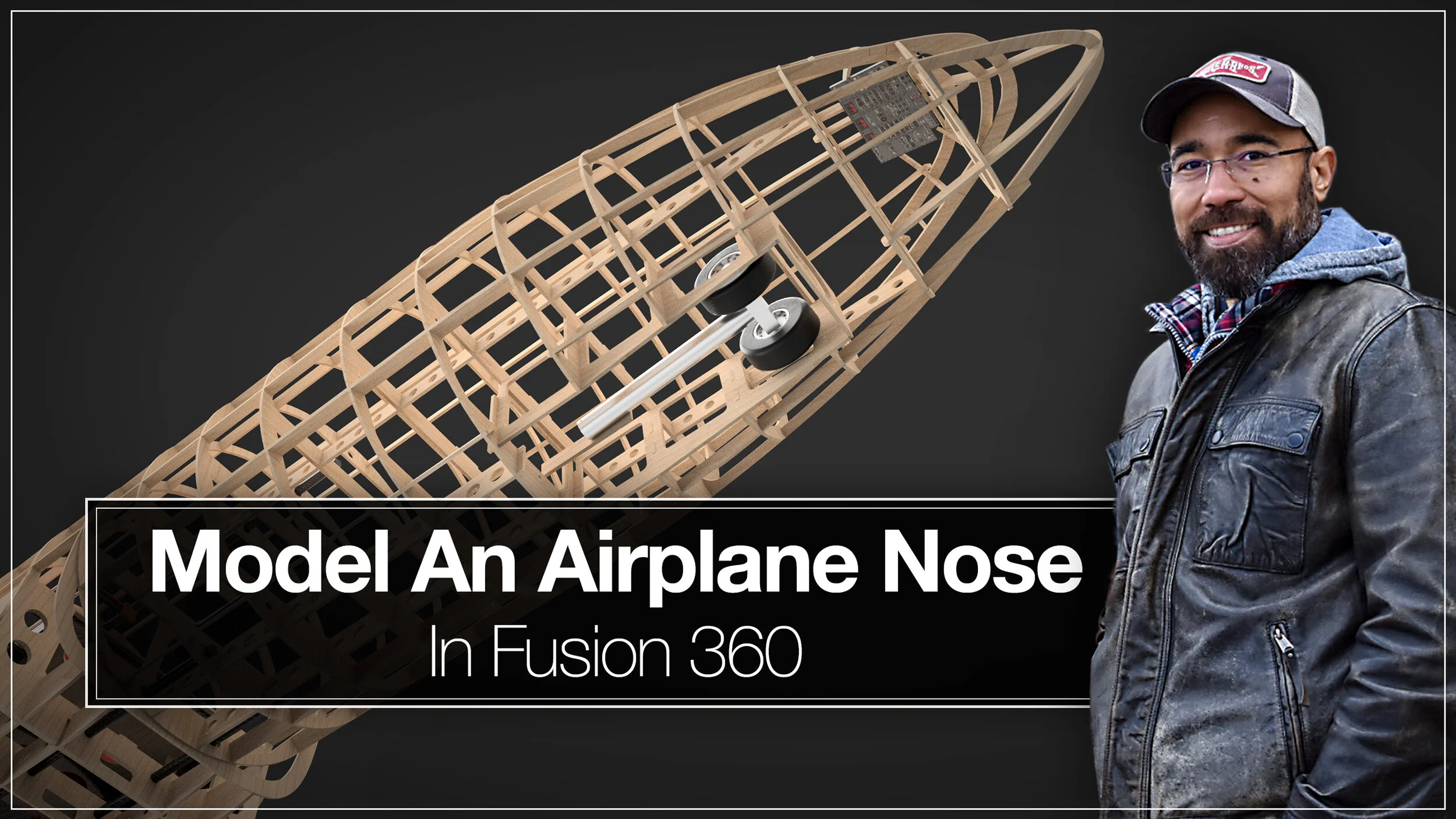
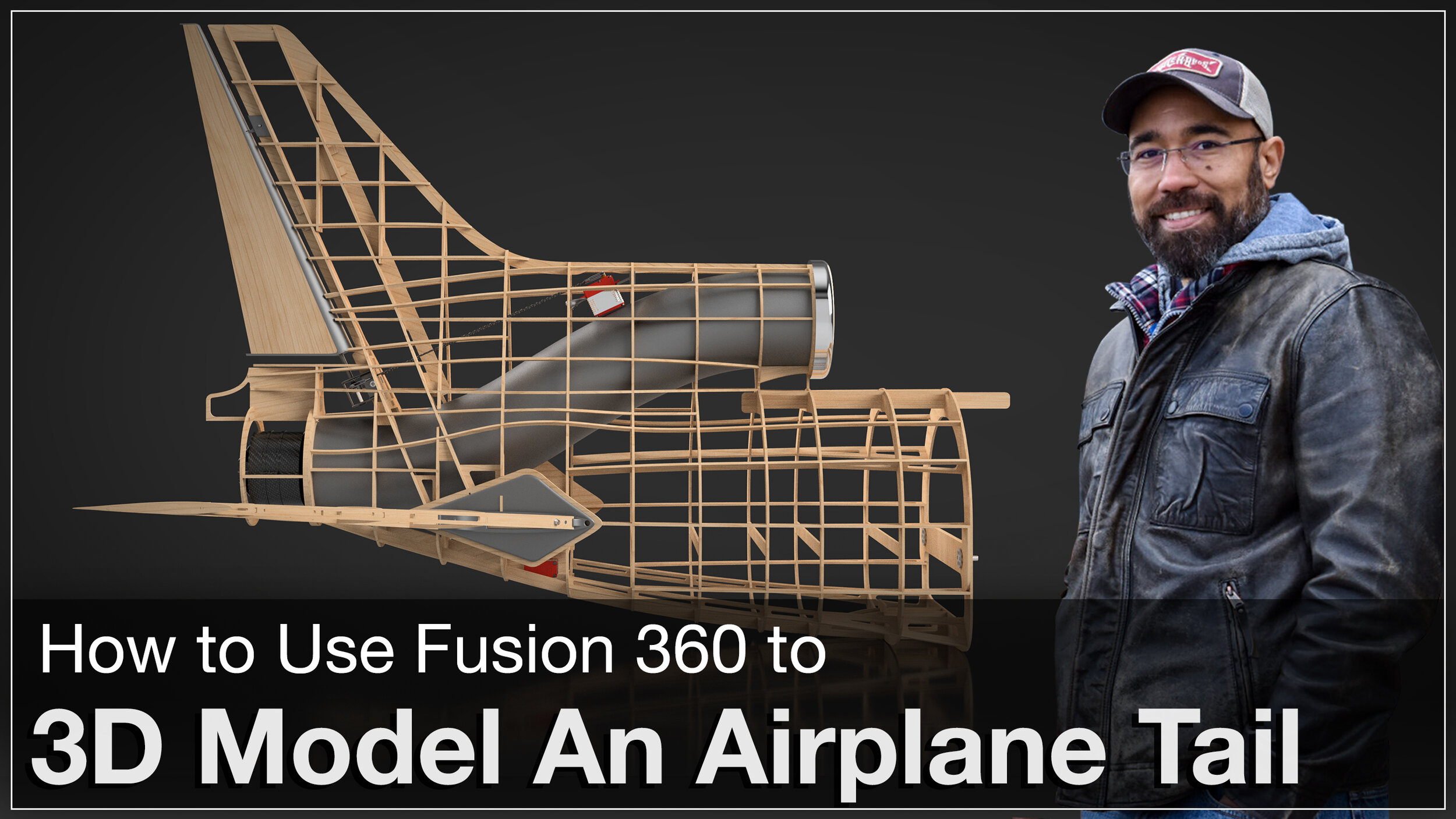

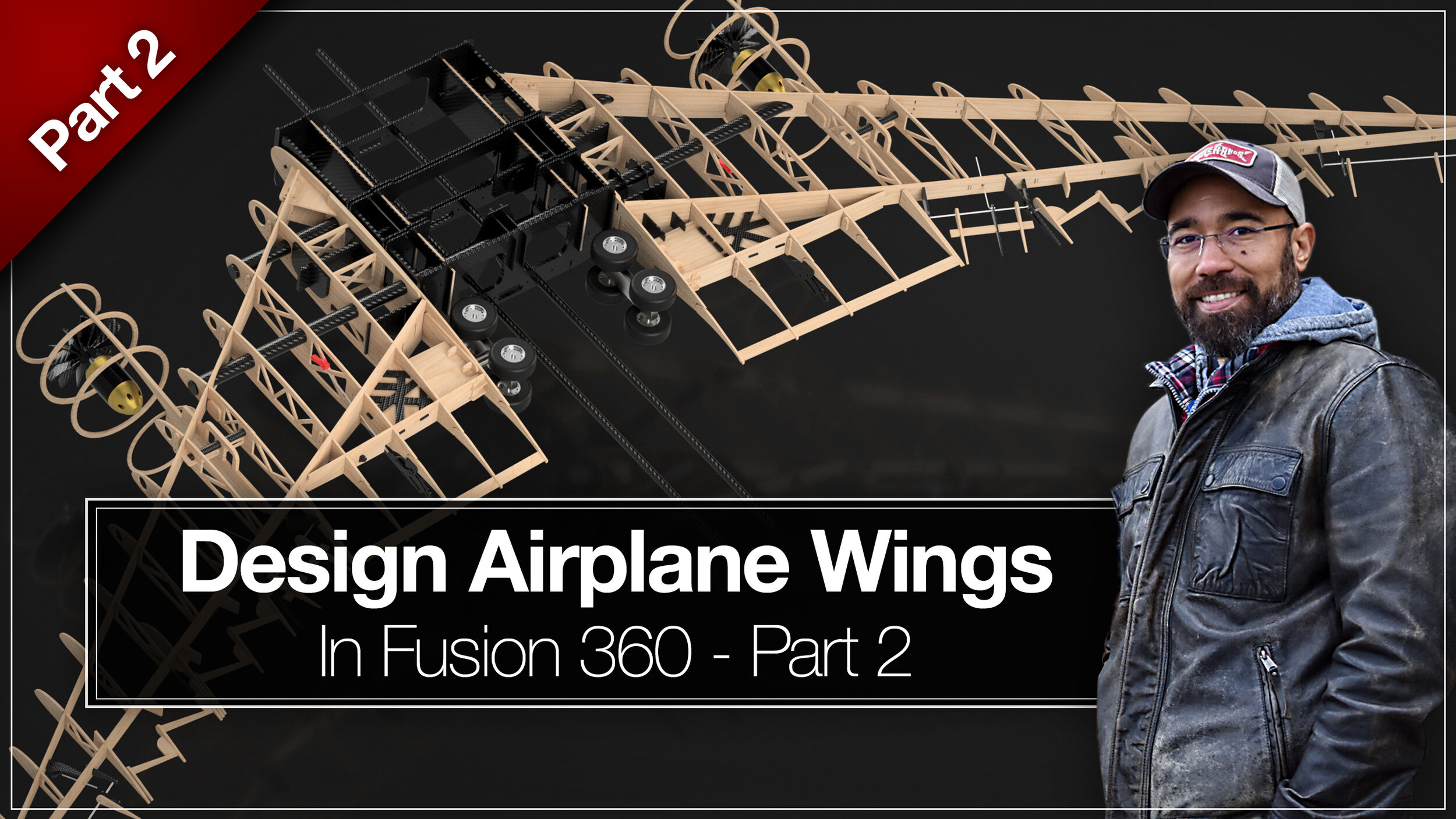
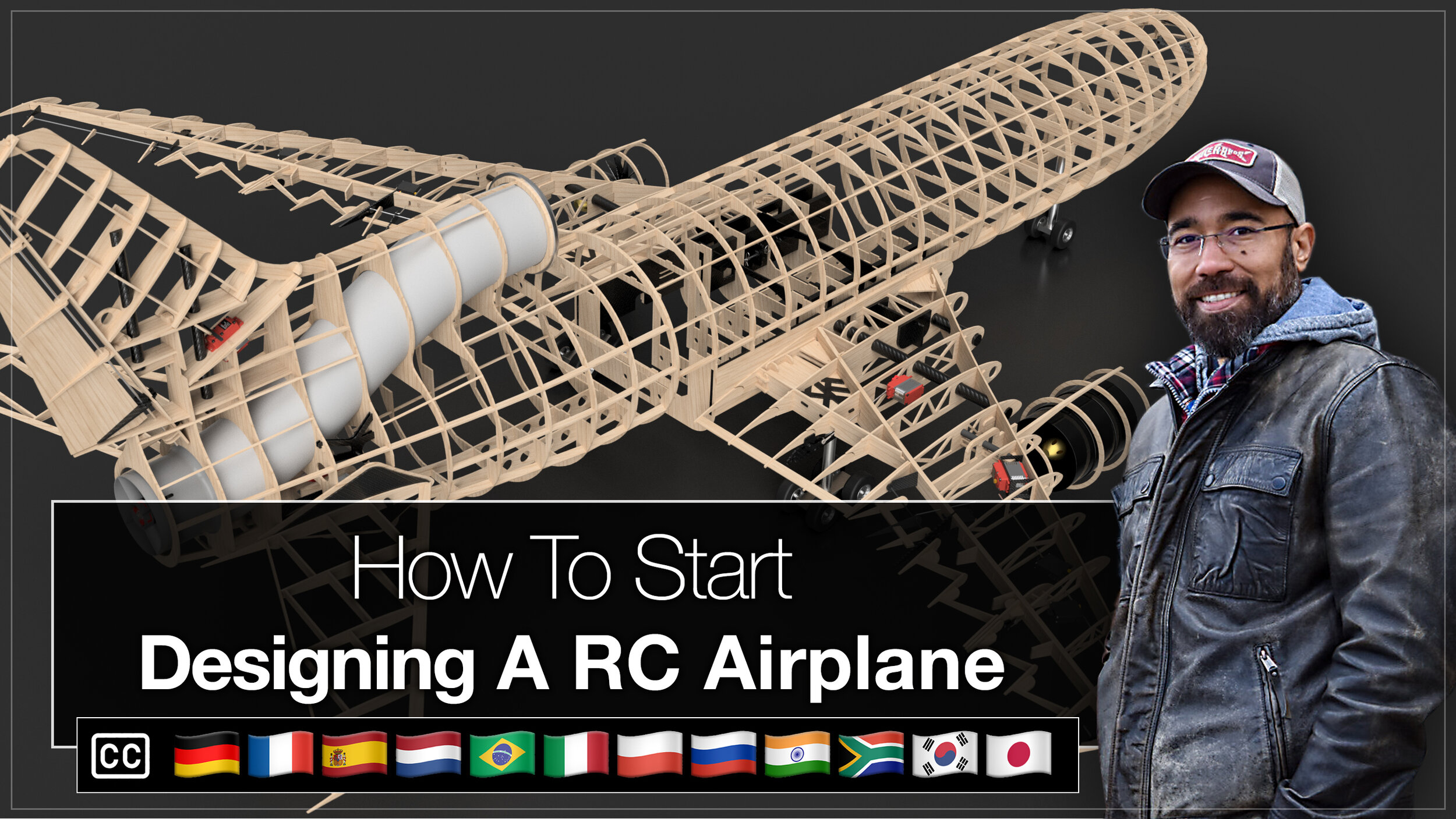

As a follow up to "How to Design a RC Airplane", this episode is to expand on canvas calibrations in Fusion 360 . You should have watched that episode or have a basic understanding of Fusion 360.