Building The L-1011’s Iconic Empennage
About The Design
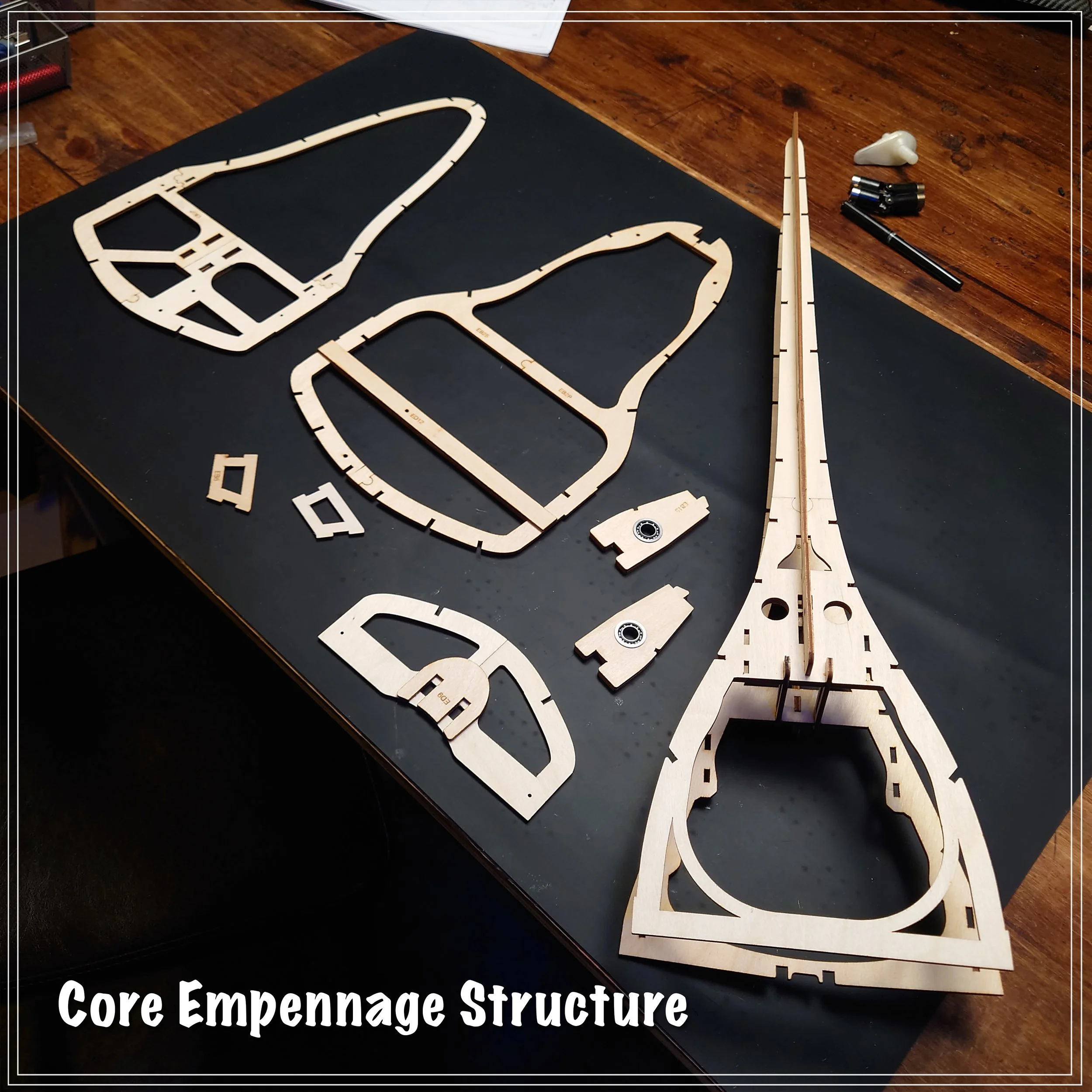
This was hands down the most challenging and complicated part of the airplane to design.
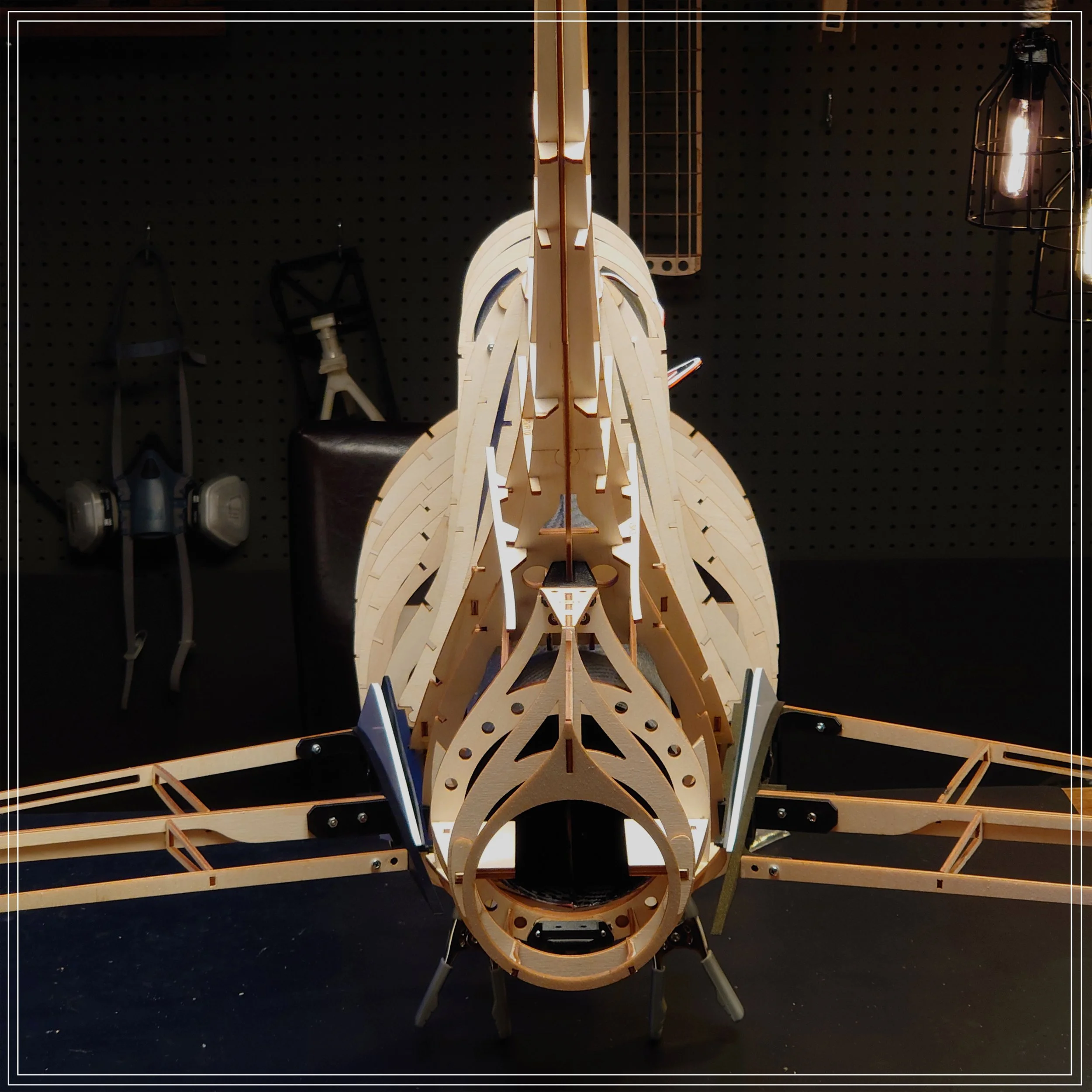
Perhaps the most unusual feature of this design is the fully functional stabilator. The L-1011 was a unique airliner, from the distinctive “In-Body” engine number two in the rear of the plane, to the more unusual choice to use a stabilator rather than elevators to control pitch.
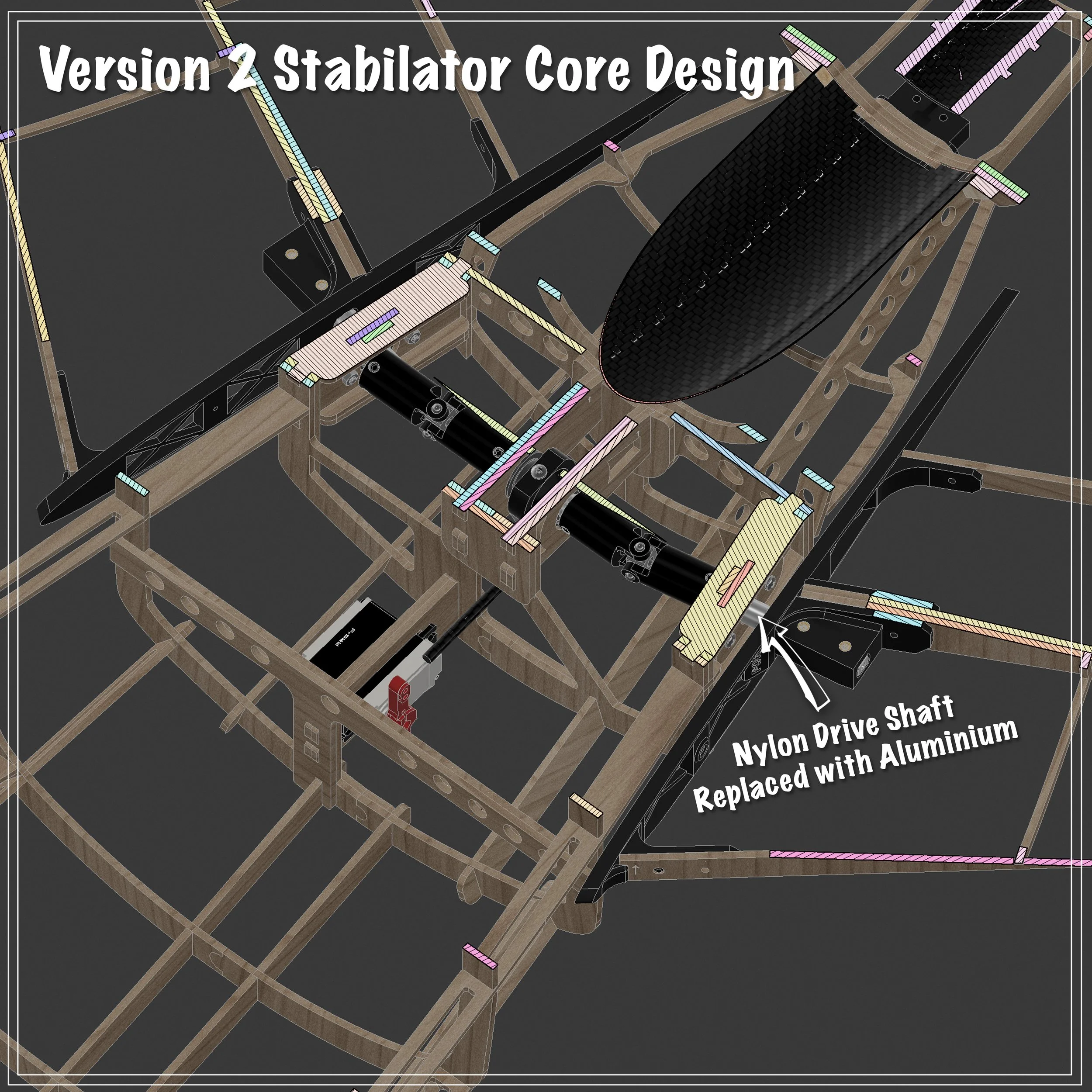
The challenge with this design was making sure that both sides rotated in perfect unison. This led me to the U-Joint solution.
The U-Join solved 3 problems:

Linking the two side together alone one single axis which can be controlled through a single servo.
Easily accommodate the placement of the root airfoil along the tapering sides of fuselage
Provides proper clearance from the S-Duct just above the control horn.
Another unusual design choice was the position of the rudder control system. The servo was moved to the top of the airframe frame above the S-Duct for 2 reasons.
It made for the easiest access point to service or replace the servo if needed
It needed to be in line (correct angle) with the rudder horn.
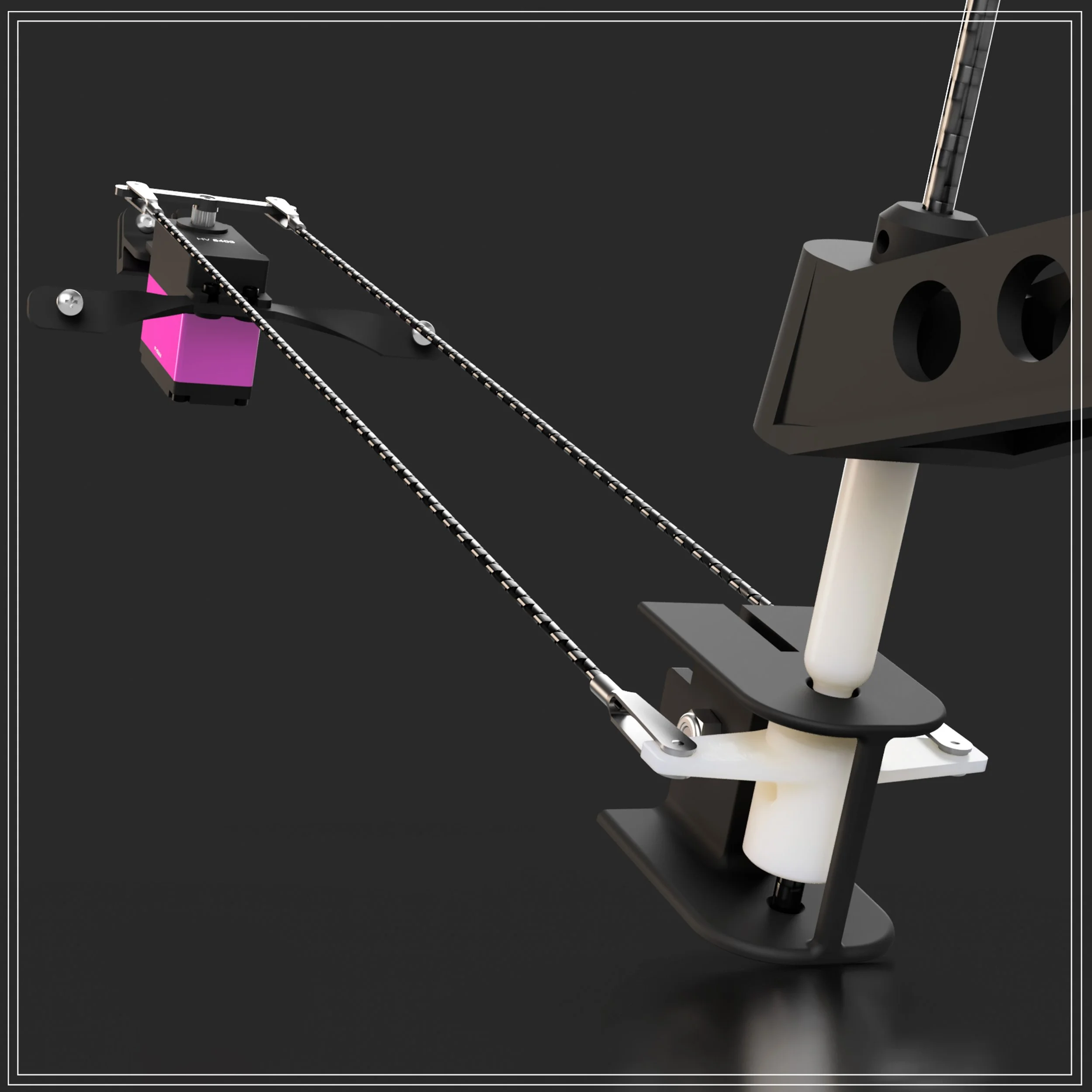



Originally the rudder servo was located almost directly under the rudder, however, this presented several challenges. The biggest challenge was accessibility. It was simply too nestled inside the support structure of the vertical stabilizer that getting to it after covering would be too fiddly if not impossible. That position also required a shape modification to the S-Duct, which was unacceptable to me.
Why Not Use Traditional Rudder Actuation?
In most designs, the rudder is controlled with a horn that protrudes out from the skin connected by a push rod. That is certainly a very simple and effective way to control the rudder, but it also takes away from the realism of the model. For this reason, the rudder is controlled internally through a custom design pivot control system.
3D Printing Mold Forms for Carbon Fiber and Fiberglass
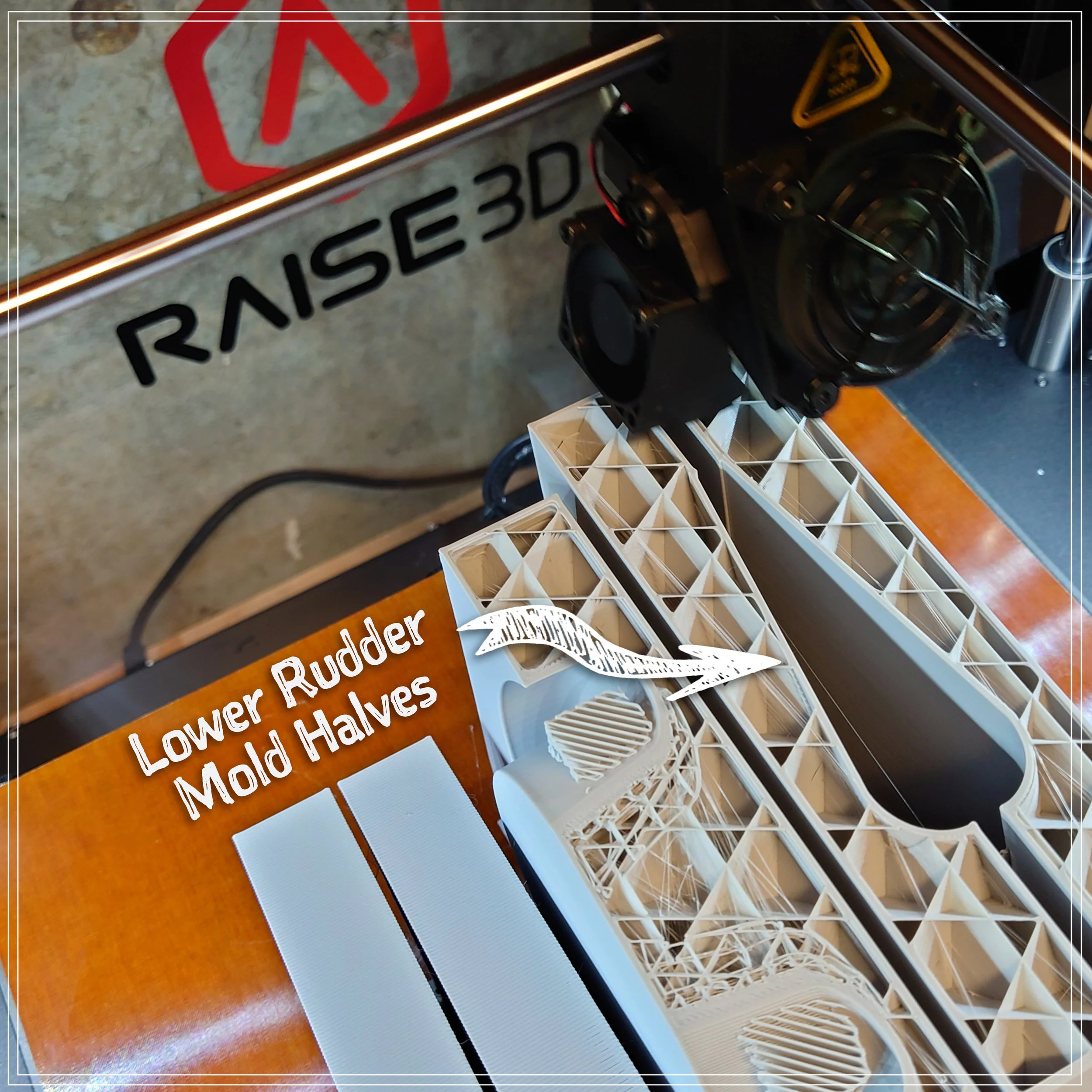
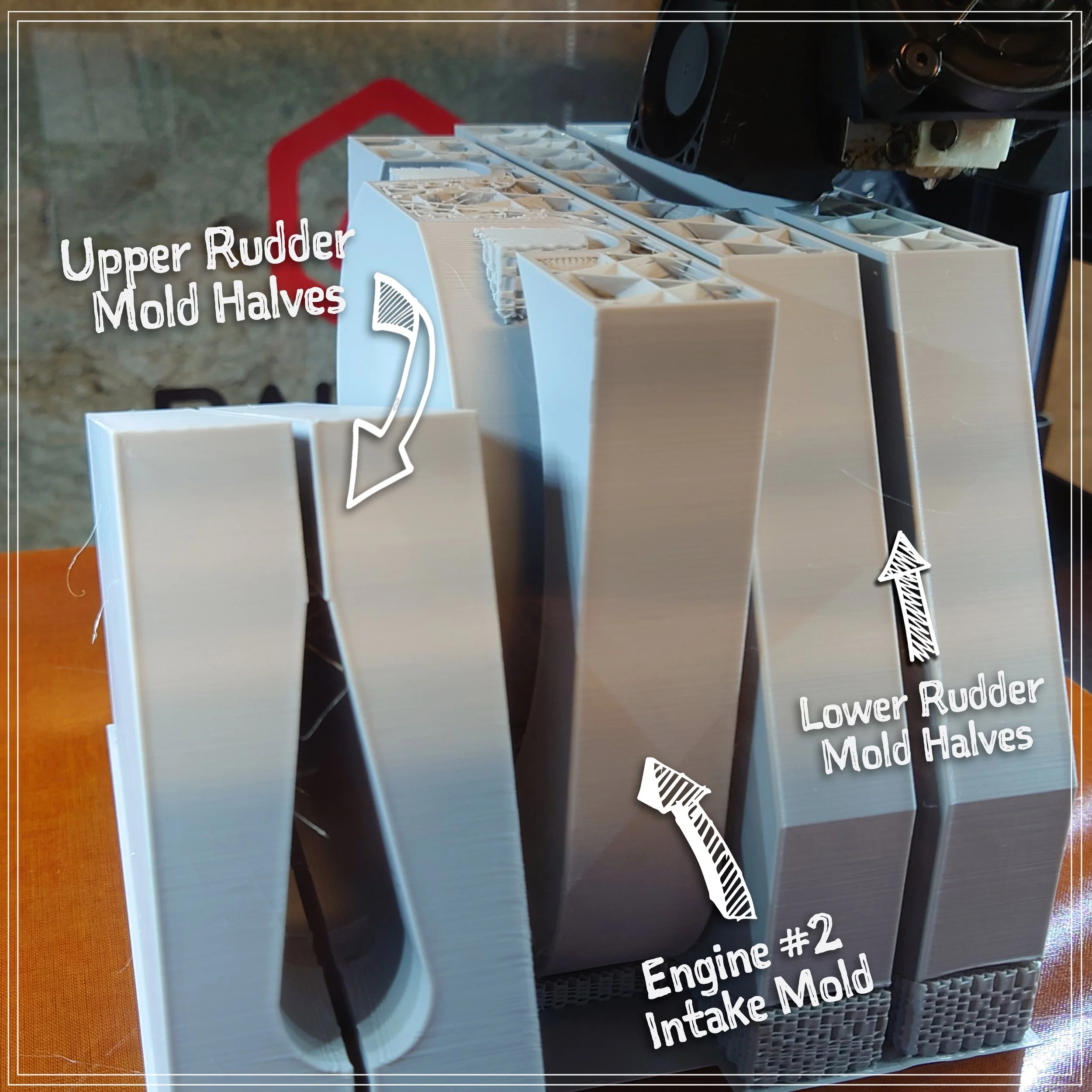
This section of the aircraft required the most amount of 3D printing.
The S-Duct mold took more than 100 hours to print using Matterhackers Tough PLA on the Raise 3D Pro2. The duct was split into 6 sections and printed 2 at a time since I have the Pro2 and not the Pro2 Plus which would have allowed me to print 4 sections, 2 at a time.


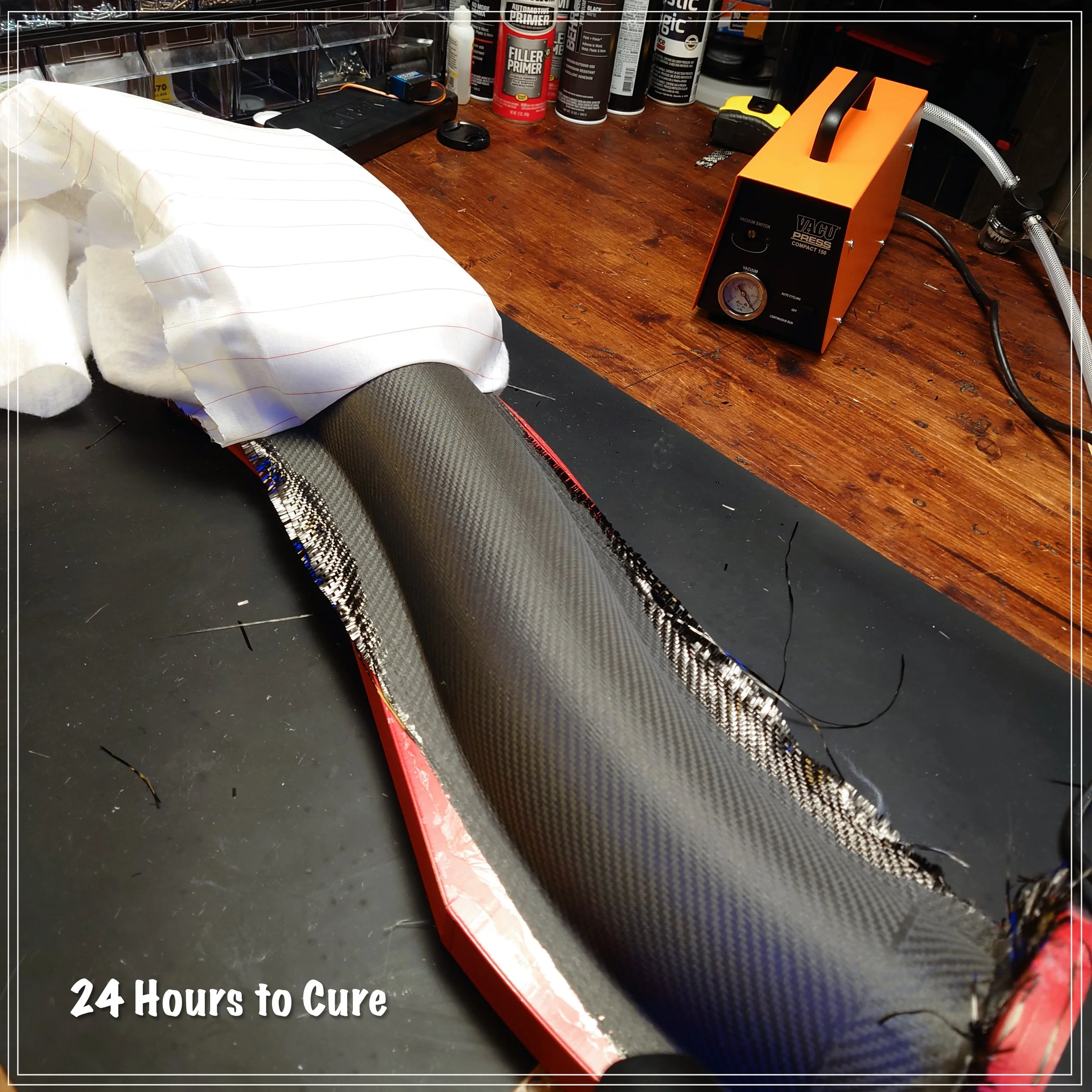


For every 2 sections a full 1kg spool was used. The reason I went through so much filament is because I decided to print a much thicker outer wall (5 shells to be exact), with a 3% cubic infill. Why? This mold was relatively expensive to print and must stand up to many uses to produce L-1011 RC Airplane kits S-ducts. Once prepared for mold making, I want to limit premature damage and produce as many S-Ducts as possible before needing a replacement.
Materials Used:
Carbon Fiber Intake Tube:
3K 5.7 Oz Carbon Fiber Twill, 4 Oz Breather Cloth, Econostitch Peel Ply, Gray Sealant Tape, Stretchlon 200 Bagging Film
Source: FibreglastMold Form:
Tough PLA (Matterhackers), Polyvance Plastic Magic Adhesion Promoter, Grey filler primer, Behr Gloss Red Spraypaint, PARTALL Paste #2 Mold Release Wax, PVA release agent
3D Printed Mold Forms for The Rudder



How I Use 3D Printed Parts For RC Models


For this build, you’ll notice that I make good use of the Raise 3D Pro2 3D Printer… especially in this section of the model. There are two key filaments that I use. Taulman Alloy 910. I used this for parts that need to be strong, but also very low friction. You may have noticed them used on the stabilator base plate as a rail slide to help hold the leading section in place.
3DXTech’s CarbonX PA12+CF turned out to be very brittle & far too difficult to get a good print. For production I need a strong, light, reliable, and repeatable material.
All of the black parts you see used in this section of the airplanes fuselage are made from Matterhackers NylonX. Originally I was going to use 3DXtech CarbonX PA12+CF but the filament is incredibly difficult to print. Getting the first layer down takes significant tuning. Once I was able to get a decent first layer down, no matter how much retraction and coasting adjustments I made, it would always ooze and leave “tits” all over the surface. Another discovery I made with the CarbonX PA13+CF prints is how incredibly brittle the parts were. This was simply unacceptable for this project.
For this reason I opted for NylonX, which produces far more predictable results and much stronger parts. In the end this material was selected for several reasons:
Strength to weight ratio
PA12 absorbs less moisture and is better suited for both humid and arid climates without losing integrity
Reduced chance of warping
Chemical resistance makes it a better choice for a variety of adhesives that will not degrade the parts
PA12+CF is commonly used in aerospace, motor sports, military, and civil engineering


Horizontal Stabilizer / Stabilator


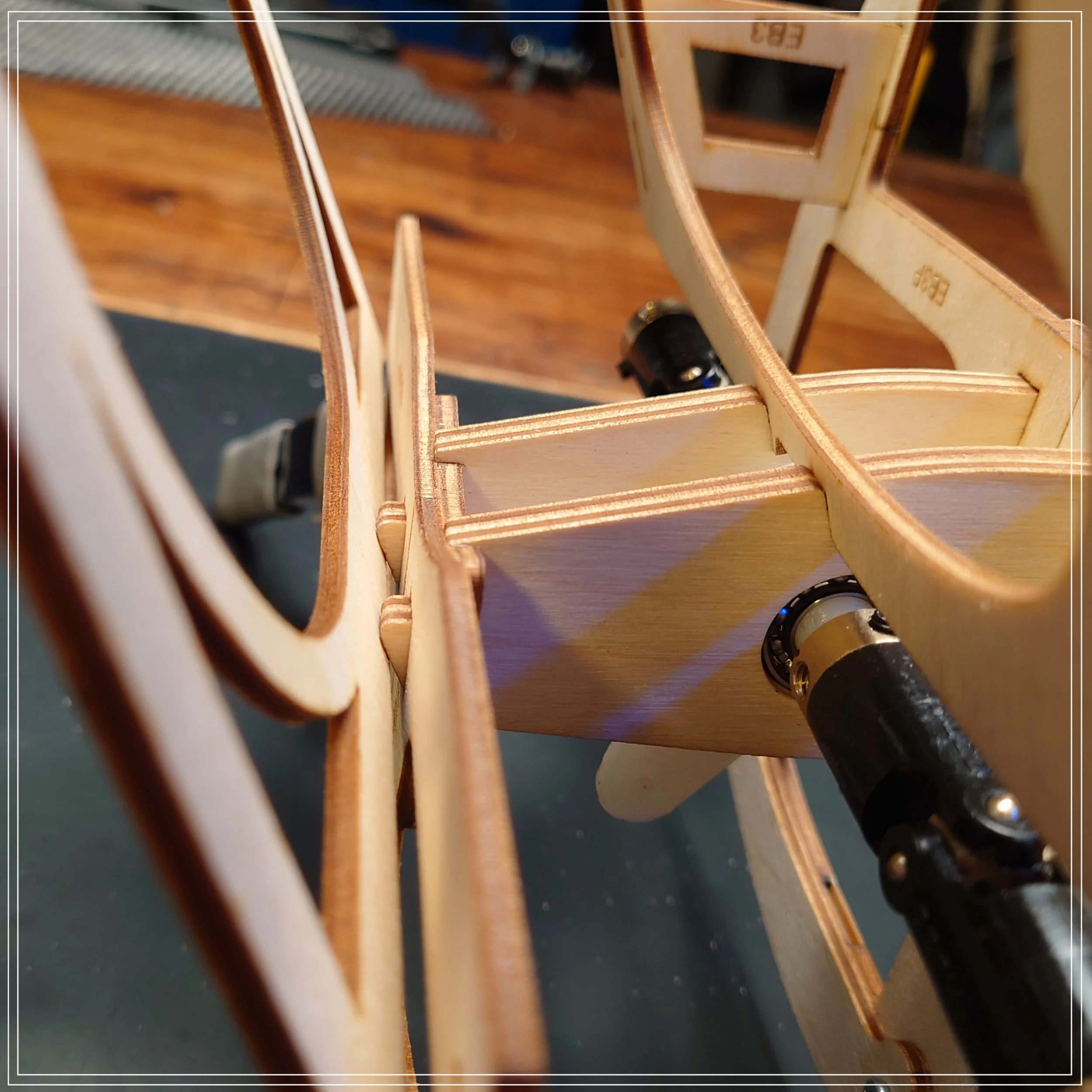


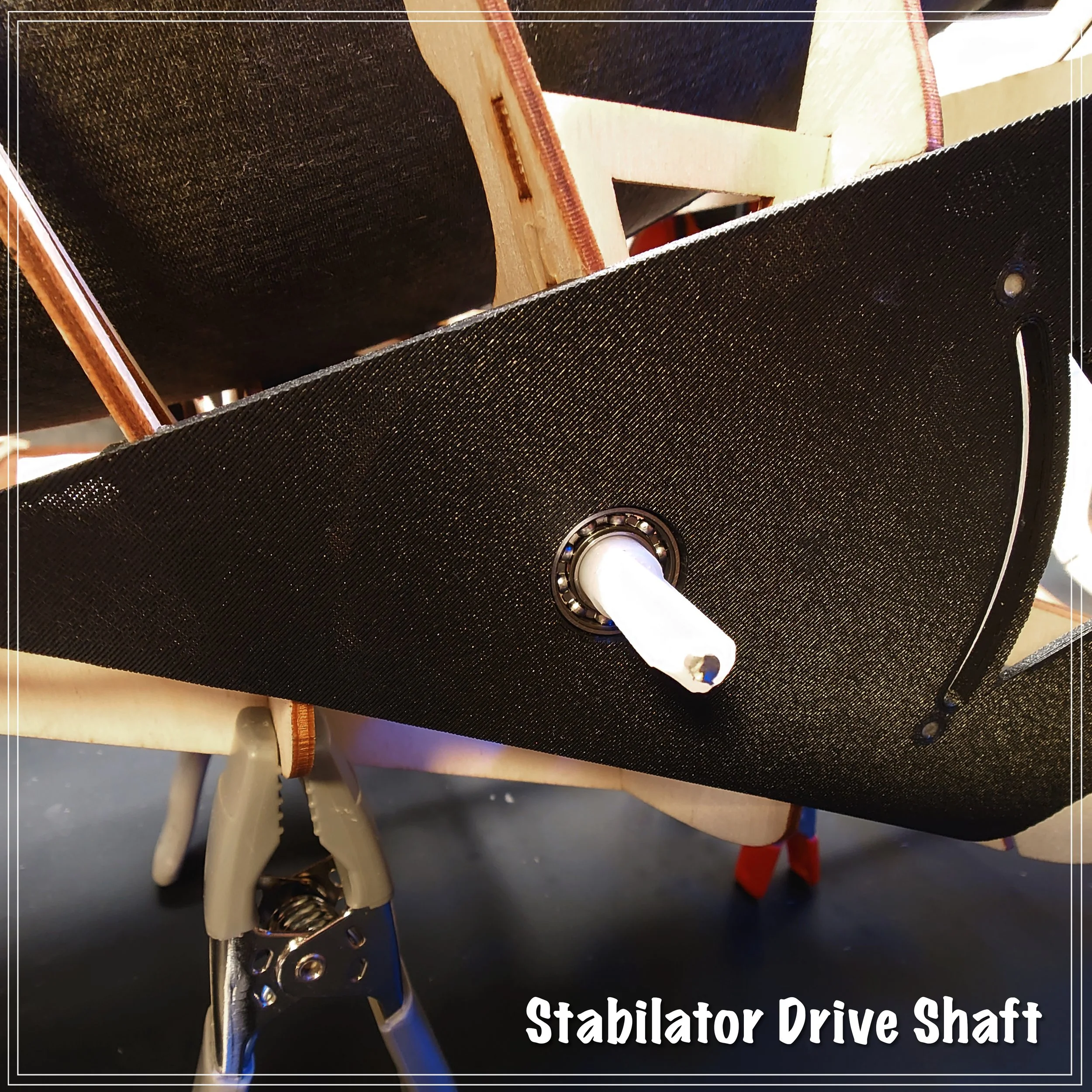


Servo used to actuate the stabilator is the FrSky BLS5405H which was provided by FrSky.
Rudder
Putting it All Together




Build Series


This Build Episode’s Sound Track
Building a soundtrack for the build videos is an interesting and tedious exercise that takes many days to weeks to compile. In this episode, you may have noticed a distinct style of music and there’s good reason for that. The L-1011 went into service with Eastern Airlines in the early 70’s. It flew passengers around the world for nearly 4 decades. This inspired the way I curated the music. For this episode I wanted to nod to the 80’s, a decade known for music with heavy synth sounds and the L-1011 taxiing and taking off at all major airports. The 80’s were also known for kitschiness, movie montage sequences, and eccentric music, which I tried to capture in this video as well. I realized when selecting this music it may be polarizing or off-putting to some, but so to are all artistic choices.
All Music Selected from Epidemic Sound, Click here to listen to this Playlist.
Dark Prince | ELFL
Alienated | ELFL
Cuenta | Autohacker
Swag Rider | Wave Saver
Foolish Thinks | Ava Low
Ocean Way | SOOP
Future U | Hysics
Zombie Raiders | Wave Saver
Expanding | Elliptik
Mega Women IV | ELFL