Washout and Why is it Important in Wing Design
What is Wing Washout?
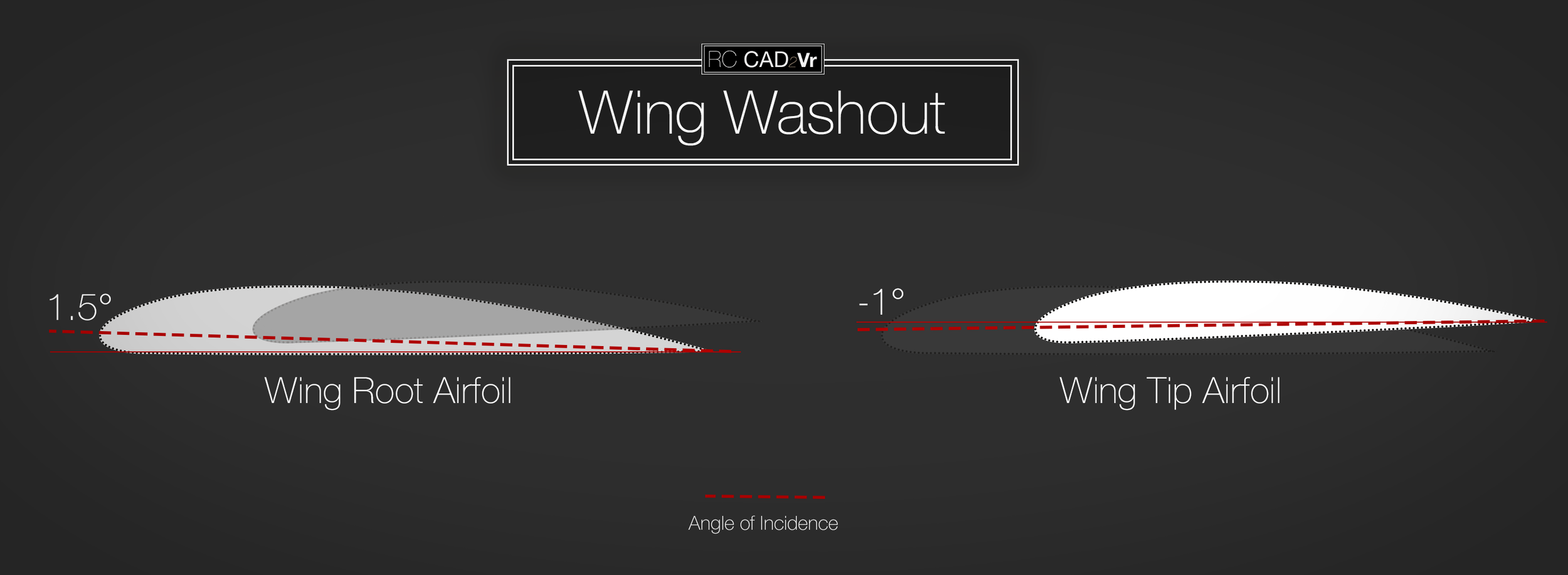
In the most simplest of terms, washout is a twisting of a wing’s angle of incidence from the root of the wing to the tip. This design characteristic is critical to the wings performance particularly in slow flight and/or high angles of attack. The purpose for washout is to control the stall characteristics of the wing. It ensures the root will stall before the tips to maintain aileron authority for as long as possible.
In flight conditions where laminar flow begins to collapse, starting from the trailing edge and progressively moving forward until the airfoil can no longer produce enough lift to overcome gravity, a stall occurs. In a stall condition, a wing without washout will lose aileron authority as soon as the wing stalls which can be a dangerous situation requiring quick action and skill to recover.
In contrast, a wing with washout is designed to ensure the wing begins to stall at the root. The wing tip’s lower angle of incidence ensure that it’s angle of attack in flight will be less than that of the wing root. Having a lower angle of attack means laminar flow at the wingtip stays intact longer giving the pilot aileron authority while in a stall condition.
Also, Check out This Wing Tutorial Video






Designing a plane but don't know where to begin with wing design? In this video tutorial I’ll show you how to start designing wings for your RC airplane. Whether you’re building with balsa, 3D printing, or developing foam plans the Fusion 360 concepts are the same.