Dihedral vs Anhedral Wings
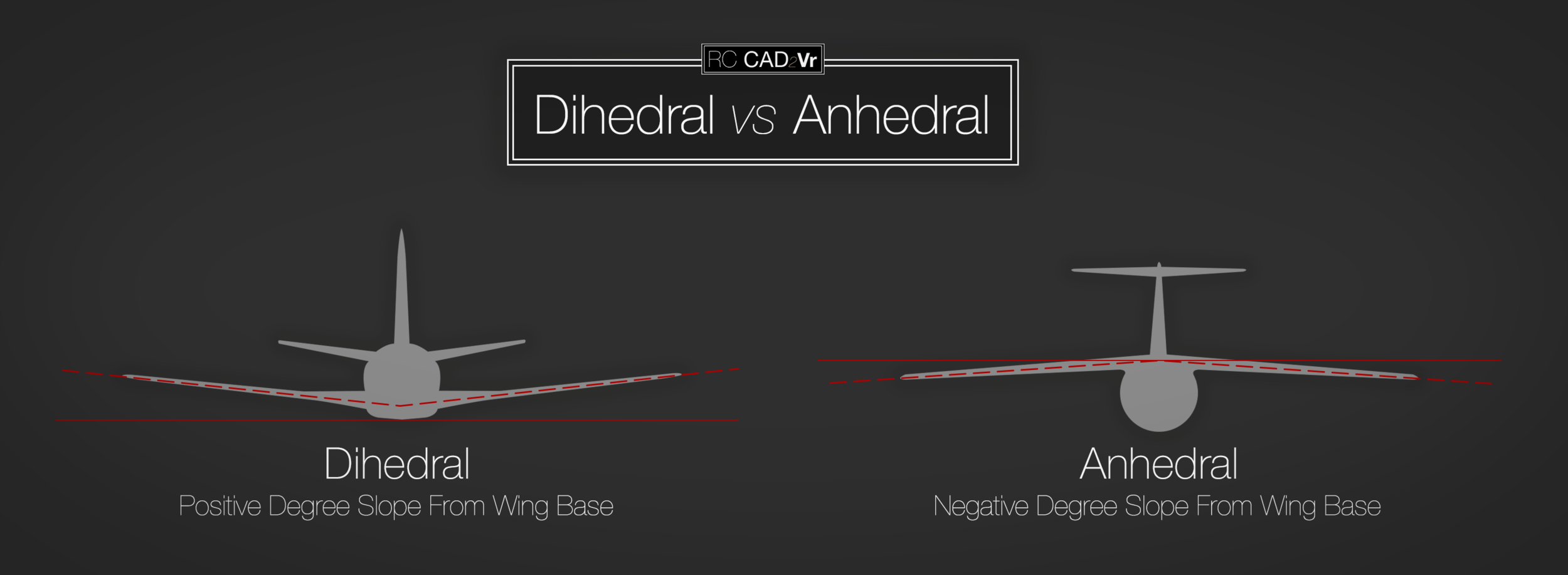
Dihedral is where the wing slopes in a positive (upward) degree in relation to the wing base, whereas anhedral wings have a negative (downward) slope from the wing base. Let’s explore a little further on why designers chose one over the other .
Their application is chosen based on the roll (lateral) stability characteristics the aircraft designer and manufacture want to achieve with the design of the aircraft.
Passenger airliner's and most, if not all, civil aviation aircraft with low wing design incorporate wings with dihedral. The main desirable effect this wing configuration has is its effect on roll stability.
Airplanes with dihedral, in non unusual attitudes, will naturally want to restore level flight when no roll input is given by the pilot. This is why planes with dihedral are known to be more stable in the roll axis.
High wing aircraft may also have dihedral, like many Cessna’s, but their degree of dihedral is far less than say a Piper Cherokee. This has to do with the center of mass being below the wing which introduces the keel effect (aka pendulum effect.)
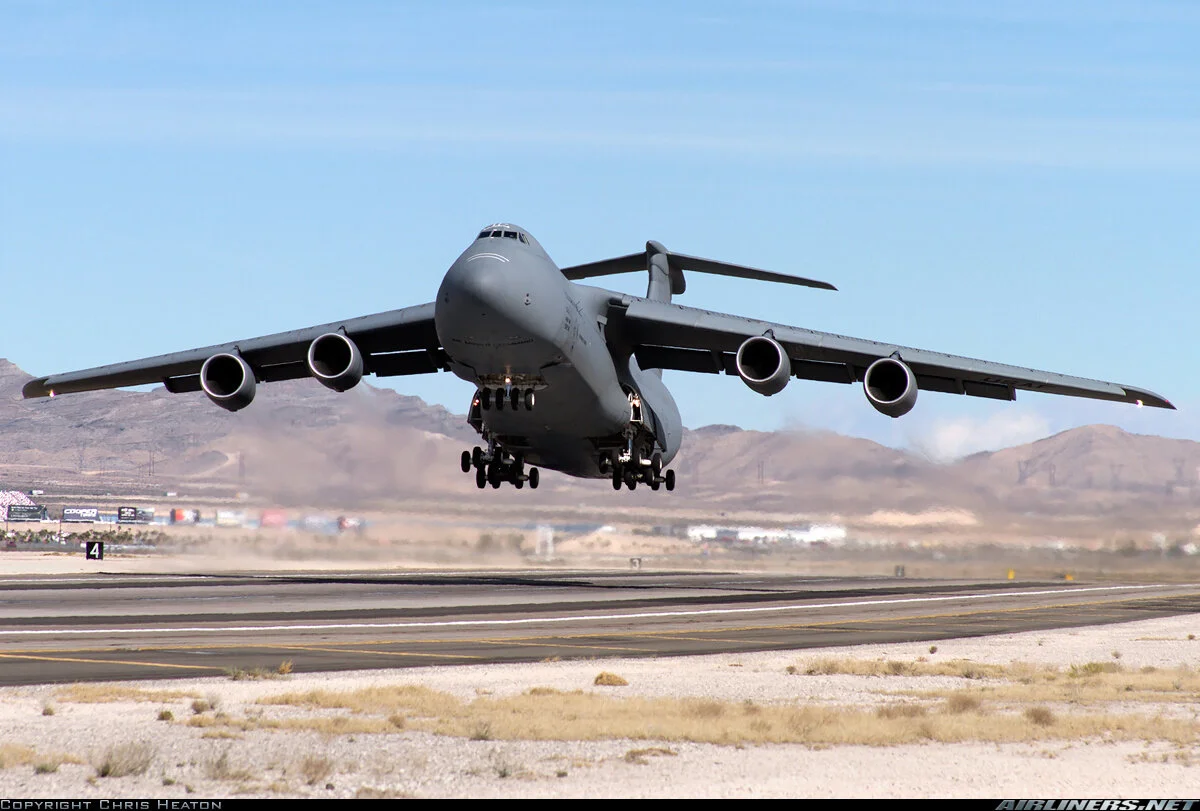
Lockheed C-5M Super Galaxy L-500
Source: airliners.net
High performance military jets and heavy lifting high-wing cargo planes are, more often than not, designed with anhedral wings.
They use anhedral for different purposes though.
Fighter jets, for example, don’t need roll stability, it’s actually very undesirable because high maneuverability is needed. Anhedral gives these fighters very nimble flight characteristics, but this also makes them more challenging to fly.
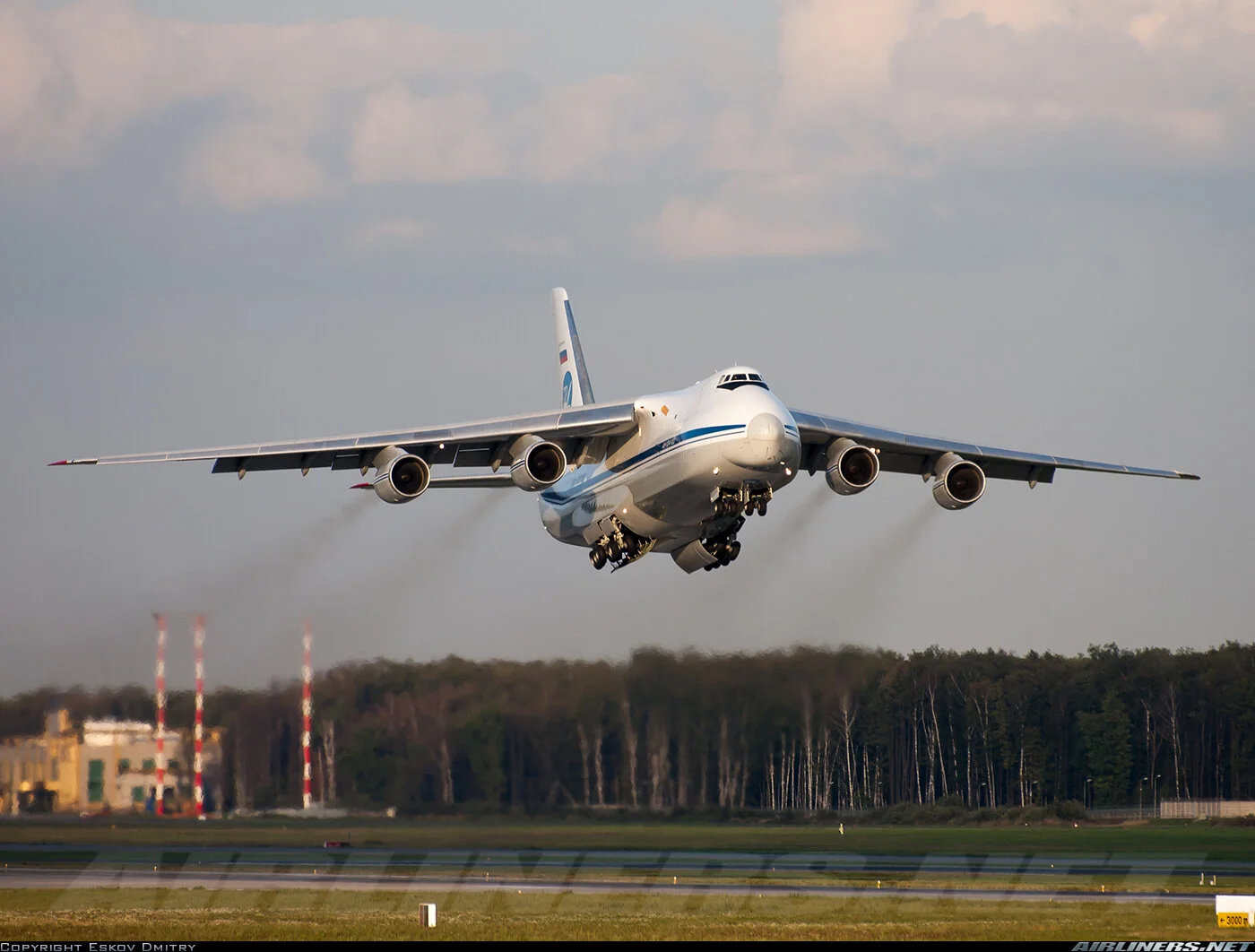
Antonov AN-124-100
Source: airliners.net
In high-wing cargo planes like the Lockheed C-5 Galaxy and Antonov An-124 the pendulum effect acts on the plane making it even more stable. By using anhedral wings this roll stability is decreased.
Why would you want to decrease the roll stability? Well, without the anhedral, it would have far too much dihedral effect making it very difficult to move about laterally.
With enough weight the ailerons may not provide enough deflection to bank the aircraft. The anhedral reduces the dihedral effect bringing the wing’s roll characteristics into a more desirable performance envelope while keeping it stable yet maneuverable.
What is Keel Effect in Aviation?
Keel Effect, also called pendulum effect, is an aerodynamic effect which affects the roll stability of an airplane. It’s influence on an aircraft’s roll axis is influenced by the wing’s dihedral or anhedral. Aircraft with dihedral will have a natural tendency to stay level in flight. When a bank or roll is introduced, the inside wing will begin to produce slightly more lift due to side slippage. This additional force induces a torque on the roll axis, the keel, pushing the inner wing up until equilibrium between the two wings is restored.
It’s important to note that the keel effect can be overcome in steeper turns where the outer wing is producing more lift than the inner wing since it is moving faster through the air. Think of how the inner portion of a propeller moves through the air slower than the tips, this principle also applies to fixed wing aircraft flying at higher bank angles.
More Aeronautic Concepts

Fusion 360 Airplane Design Video Tutorials